Public leaderboards tell you what wins a blind vote. They do not tell you whether a model can hold your character, draw your scene, or take a real face. So we test on our own work, and that evidence counts most.
The order of evidence
Our own head-to-head tests. Same input, same prompt, only the model changes. We publish the method, the result and the limits. Our test
Our production use. What we actually ship with, every week. Labeled as use, never as a test.
Public blind-vote arenas.Artificial Analysis runs arenas where people pick between two outputs without knowing which model made them. We read them live and show the confidence range, so a statistical tie looks like a tie. Arena
“Best AI video model” listicles. Most top search results for that phrase rank tools by affiliate payout. We use them for nothing, not even prices.
Prices
Every price is quoted word for word from the provider's own pricing page or catalog, with the link and the time we read it. If we cannot read a provider's page, we say so and show the price Artificial Analysis lists instead, labeled. Live price
Best value, defined
The cheapest model that is still close enough to number 1 to matter. On the vote-based arenas, that means within 70 Elo points of the leader: a model that far behind still wins about 4 of every 10 blind matchups against it. On the language benchmark, it means scoring within 5% of the top model. Among those, the lowest listed price wins. It is a formula, not an opinion, so no one can buy their way onto it. For video we use the image to video board, because that is how most production work is made.
How often it changes
Every morning: arena scores, provider prices, new releases and our usage counts are re-read. The site updates itself only if every check passes: every price still matches the provider's own words, and every "#1" sentence on the site is still true. The "Live" marker at the top of each page shows when the data was last checked, and turns gold if a refresh is late. Every week: new videos from the creators we follow are read for verdicts. Every month: a deeper research pass becomes the downloadable report and can change the picks.
Read the same line with three voice models. Which one would you use as a narrator?
How: One 146-character script. ElevenLabs v4 and v4 Turbo read it in the library voice "Peter"; Gemini 3.8 Flash TTS read it in its "Charon" voice. An AI reviewer (Gemini Flash) heard the takes labeled A, B and C with the model names hidden, checked every word against the script and scored each one.
Ranked third. Every word right. Read like an ad more than a documentary. A fraction of the price.
Scores: natural / pacing / would use as narrator, out of 10.
Limits: One line, one AI reviewer. The Gemini take uses a different voice, because the ElevenLabs library voices are not available on Gemini.
Our test
Lip-synced talking characters
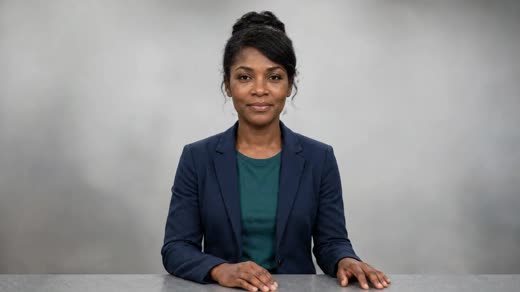
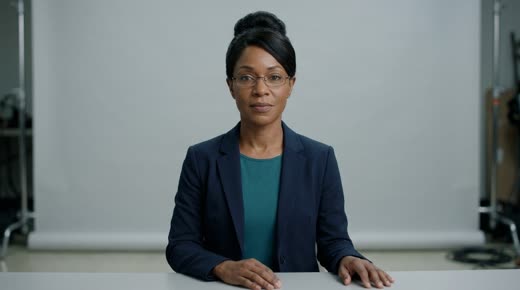
Can one model animate a still of a character and sync the mouth to our own recorded line?
How: Four shots from Pillbox on MiniMax H3 Max at 768p: three lip-synced to our voice tracks, one silent turn to camera. Graded by an AI reviewer, then by eye.
Identity held with no morphing in all 4 shots. AI reviewer: lip sync 6 of 10, natural look 6 of 10. On the silent shot it made up gibberish audio, so we replace the audio with our own mix. 30 seconds of video cost $2.43, billed at the $0.08 per second rate before this month's discount.
Clips are held until the show is released.
Limits: Four shots, one show.
Our test
Cartoon cast to photoreal actors
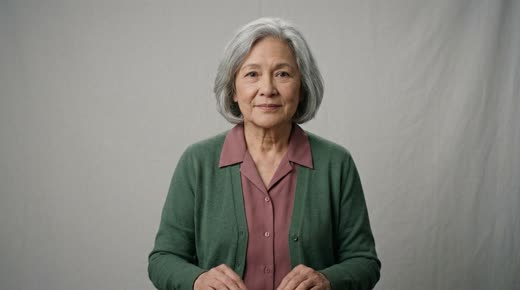
Which cheap image model turns cartoon character designs into believable actors and stays on model?
How: Six cartoon character references from our show Pillbox, each converted to a photoreal actor by two models with the same prompt.
Kept the pharmacy background on 2 of 5 characters even though the prompt asked for a plain gray backdrop, and changed one character's ethnicity. About $0.067 an image.
Limits: Both models added glasses that are not in some of the designs. One prompt, five characters shown here.
Our test
A real person's likeness
Which image tool keeps a real person's face when you put them in a new scene?
How: The same person (our founder, with his permission), the same 6 scene prompts, two tools: GPT Image 2.5 with two reference photos, and a trained character model on another platform.
Gave him a different face and hair in 2 of 6 images.
We do not publish these test images.
Limits: One person, six images.
Our test
Narration voice, blind test
Which ElevenLabs voice reads a documentary best, and how good is a home-made voice clone?
How: The same 3 lines read by top ElevenLabs library voices, scored blind by an AI reviewer (Gemini Flash) for gravitas and pacing. Separately, two clones of our founder's voice were scored the same way.
Limits: Providers change these filters without notice. Re-check before a big job.
Our test
A comic page with a recurring character
Which image model keeps one character consistent across six panels, and which ones will draw a violent scene at all?
How: One character reference sheet, generated once and passed to every model, plus the same 6-panel page prompt. We ran the scene twice, once with violence (a knife fight) and once without.
Refused the violent version with an error. On the non-violent version it followed all six story beats in order.
Seedream V4
Only model to vary panel sizes like a real comic page. Weaker storytelling.
Flux Kontext Pro
Returned a fully black image on the violent prompt, with no error.
The test pages show graphic violence, so we describe them here instead of showing them.
Limits: One page, one art style, judged by our team. Violence handling can change when a provider updates its filters.
Our test4 months old, archived
Flat 2D explainer animation
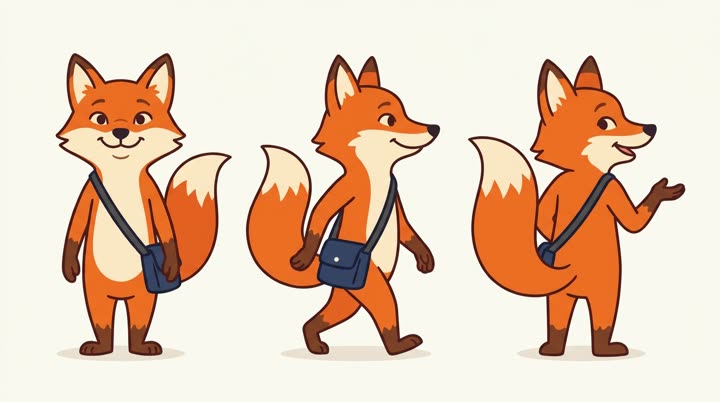
Which model animates a flat cartoon character without breaking the art style?
How: One source frame (our fox host, Finn) and one motion prompt, sent to four models through fal.ai. Only the model changed. Each 5-second clip was scored 1 to 10 for style, motion and usability by an AI reviewer (Gemini Flash), then checked by eye.
Limits: One frame, one style. Since June, newer versions of these models have shipped. Scores are from an AI reviewer, so a tie at 9 means none of them failed, not that they are identical.
Practitioner signal4 months old, archived
Practitioner consensus on action video
What do working AI filmmakers rate best for action?
How: Transcripts of hands-on comparison videos by Theoretically Media, MattVidPro AI, Matt Wolfe and JSC Films, read for their verdicts.